Objective
After researching a NASA competition called Lunabotics with a few similarly motivated engineers, we decided to found the Lunabotics team within Northwestern Stars Space-Tech. From February of 2025 to May 2026, we built the Northwestern Lunabotics team from the ground up.
Our goal was to create a lunar rover capable of autonomously excavating regolith (moon dirt, sort of) and depositing it into a berm (moon wall, kind of).
I was the Team Lead and Project Manager from March 2025 until May of 2026, when I passed the team on.
Research & Concept Selection
Since we began with a clean-sheet design and no previous rover to build upon, we set out to create a baseline design and goal. I organized conversations with experienced Lunabotics teams and led our review of previous competition designs, NASA requirements, scoring priorities, and common failure modes. This research helped us define a realistic first-year strategy centered on reliability, manufacturability, and successful mission completion.
Early Prototyping
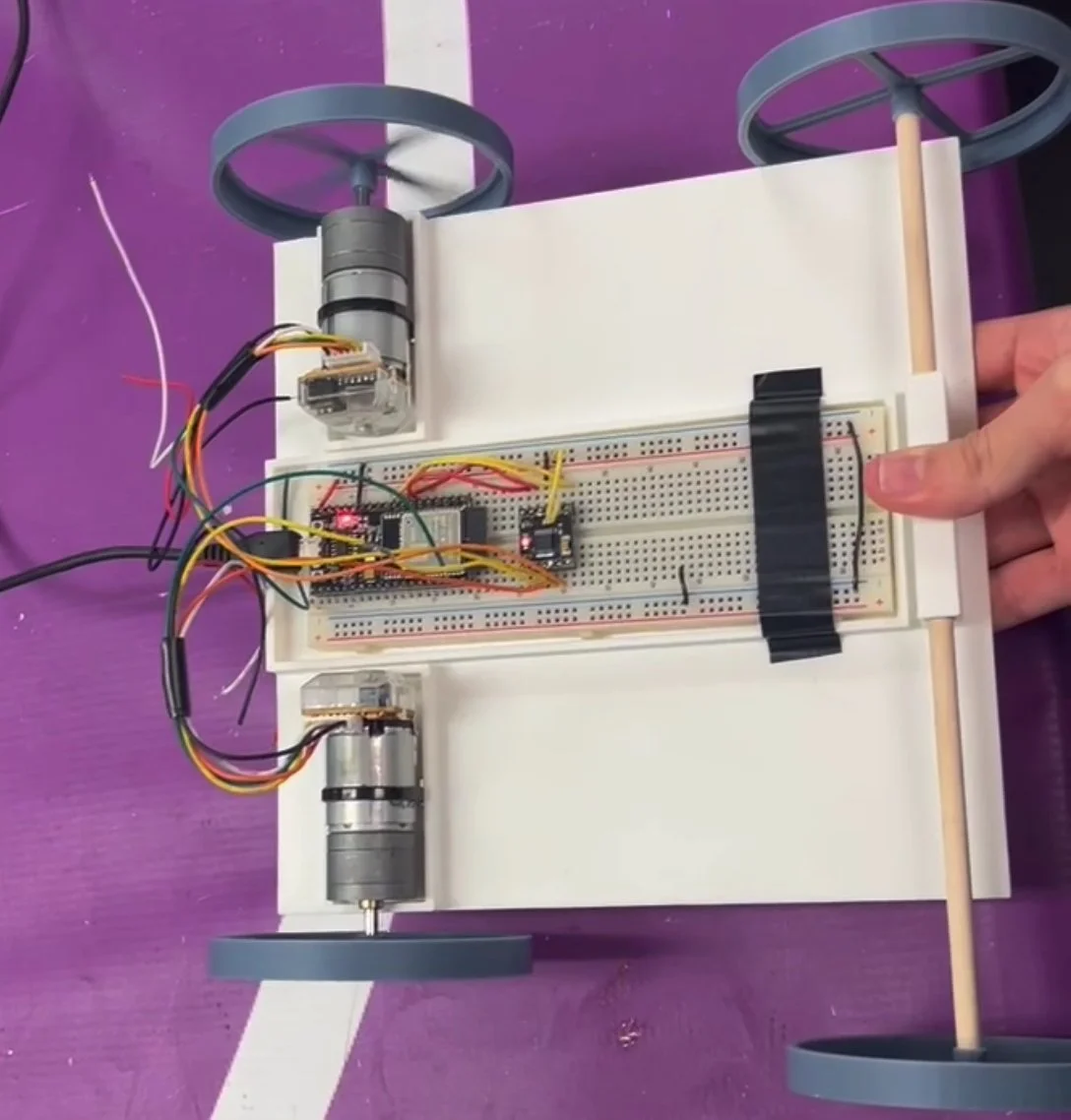
Before committing to a competition architecture, we built a small “Proof-of-Life” rover with a 3D-printed chassis, wheels, motors, and breadboard electronics. The remotely controlled prototype gave the team an accessible introduction to mechanical, electrical, and software integration while confirming that we could develop a functional rover from the ground up.
We also produced early wheel and motor test assemblies to begin evaluating drivetrain concepts and identify practical integration challenges before designing the full-scale rover.
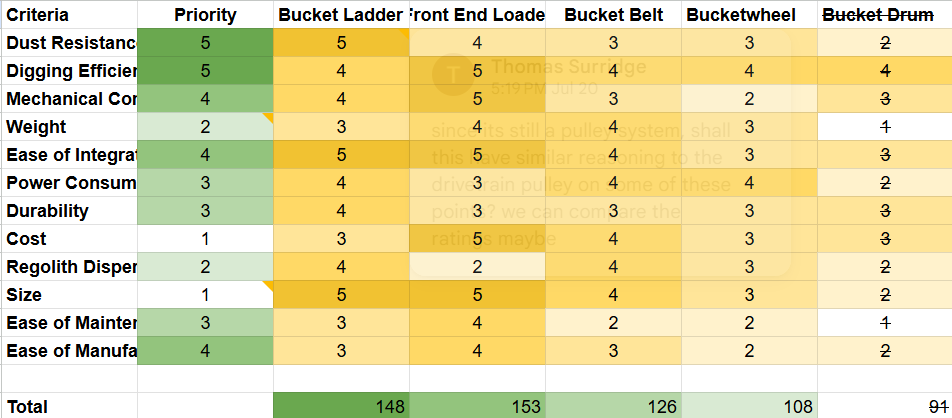
Decision Matrix example for excavation method choice
Administrative Preparation and Project Planning
As Northwestern’s first Lunabotics team, we had no previous schedule, budget, or competition process to follow. I established the administrative foundation for our entry by interpreting NASA’s application requirements, coordinating faculty approval, researching project and travel costs, and organizing the season’s major deliverables.
This preparation fed directly into our Project Management Plan. Because of the team’s small size, I independently researched, wrote, and formatted the entire six-page submission. The completed PMP included a season-long Gantt schedule, a $16,750 project budget, formal design-review milestones, a system hierarchy, and preliminary performance targets for mass, power, excavation, and autonomy.
Northwestern was one of a few teams to receive a perfect score on the PMP. I continued using the PMP after its submission, updating schedules and dependencies as technical and purchasing challenges emerged. It became the central roadmap for transforming a new student team and clean-sheet rover concept into an organized, competition-ready engineering project.
Final Rover at Competition
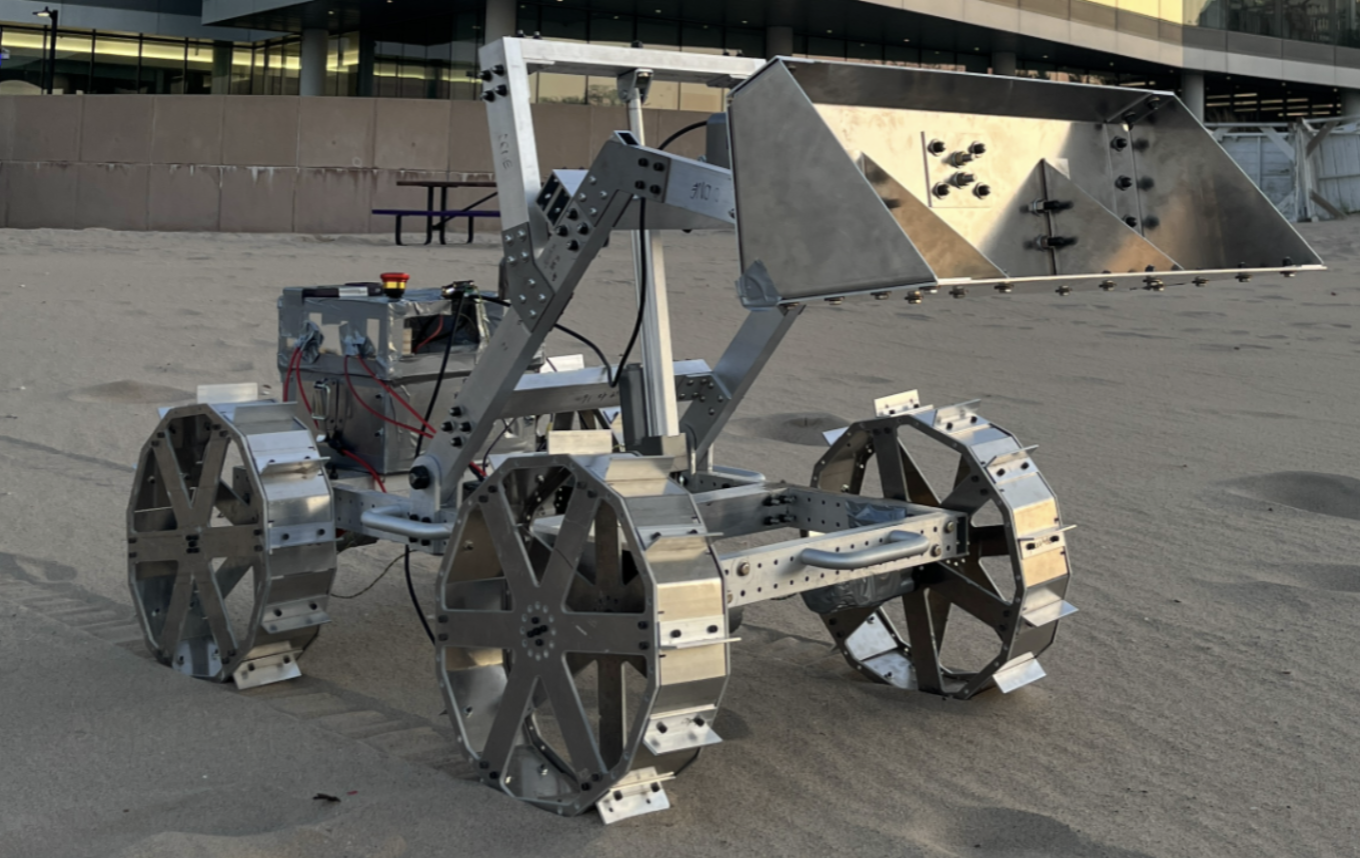
Rocky was Northwestern’s first competition-ready Lunabotics rover and the result of a clean-sheet design process. As Team Lead, I guided the development and integration of its mechanical, electrical, and control systems.
The rover used a four-wheel drivetrain built around an aluminum rectangular-tube chassis. Custom wheels provided traction in loose regolith, while protective guarding and sealants reduced dust intrusion into the motors, actuators, and electronics. Its front-end-loader excavation system used two linear actuators to dig, retain, transport, and tilt-deposit regolith for berm construction.
An onboard battery supplied separate 12-volt power and 5-volt control systems. A Raspberry Pi coordinated motor controllers, sensors, cameras, telemetry, and excavation controls through the rover’s communication network. Safety features included a competition-compliant emergency stop, over-current protection, undervoltage protection, and energy monitoring.
Rocky reached competition with functional remote drivetrain and excavation controls. Full autonomous operation and zero-radius turning were planned capabilities but were not achieved during our first season, so the competition rover relied on manual joystick control. Despite those limitations, the team successfully produced and integrated a complete rover capable of mobility, excavation, material transport, and deposition. U
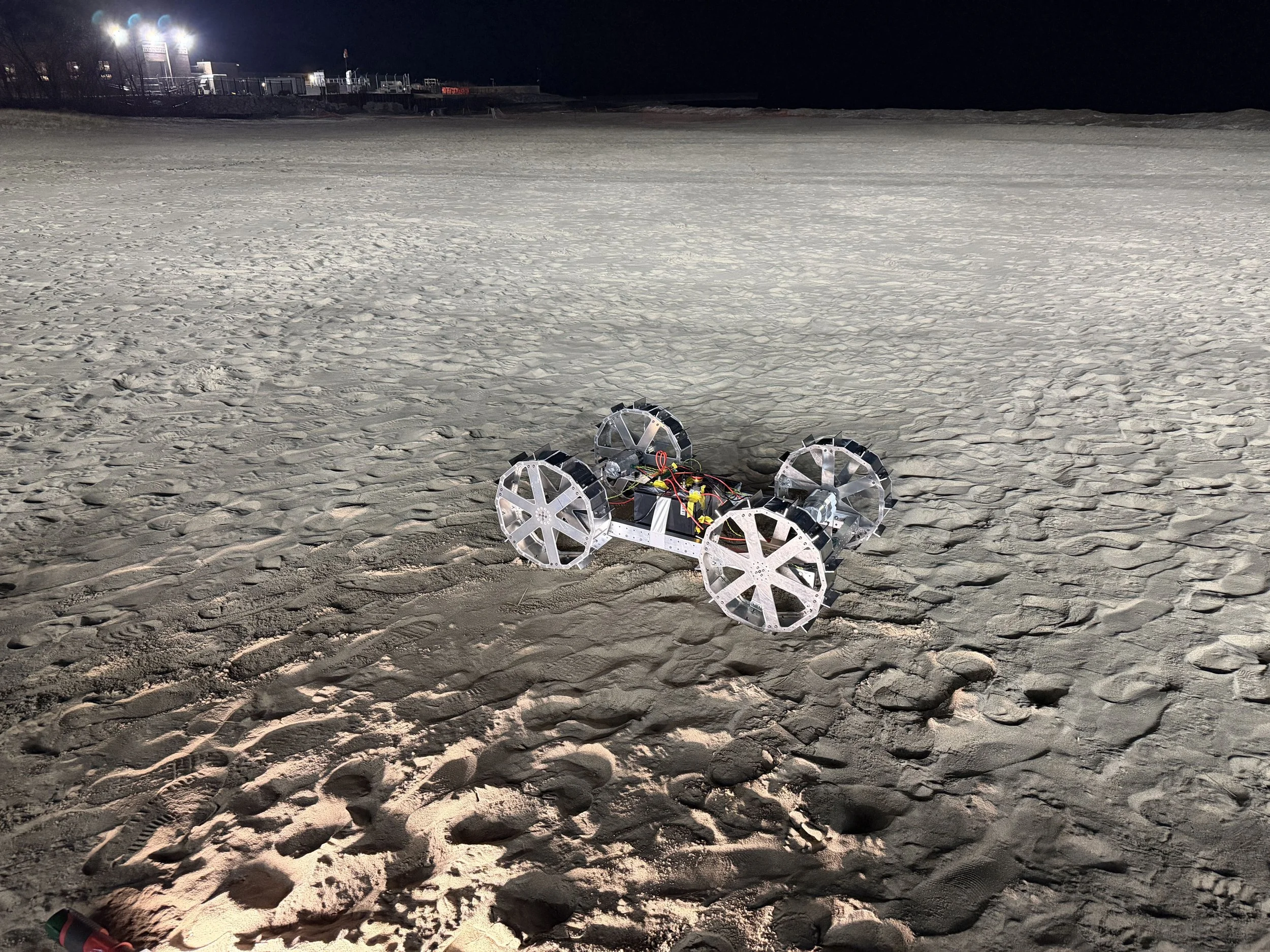
Rover Rolling Chassis Night
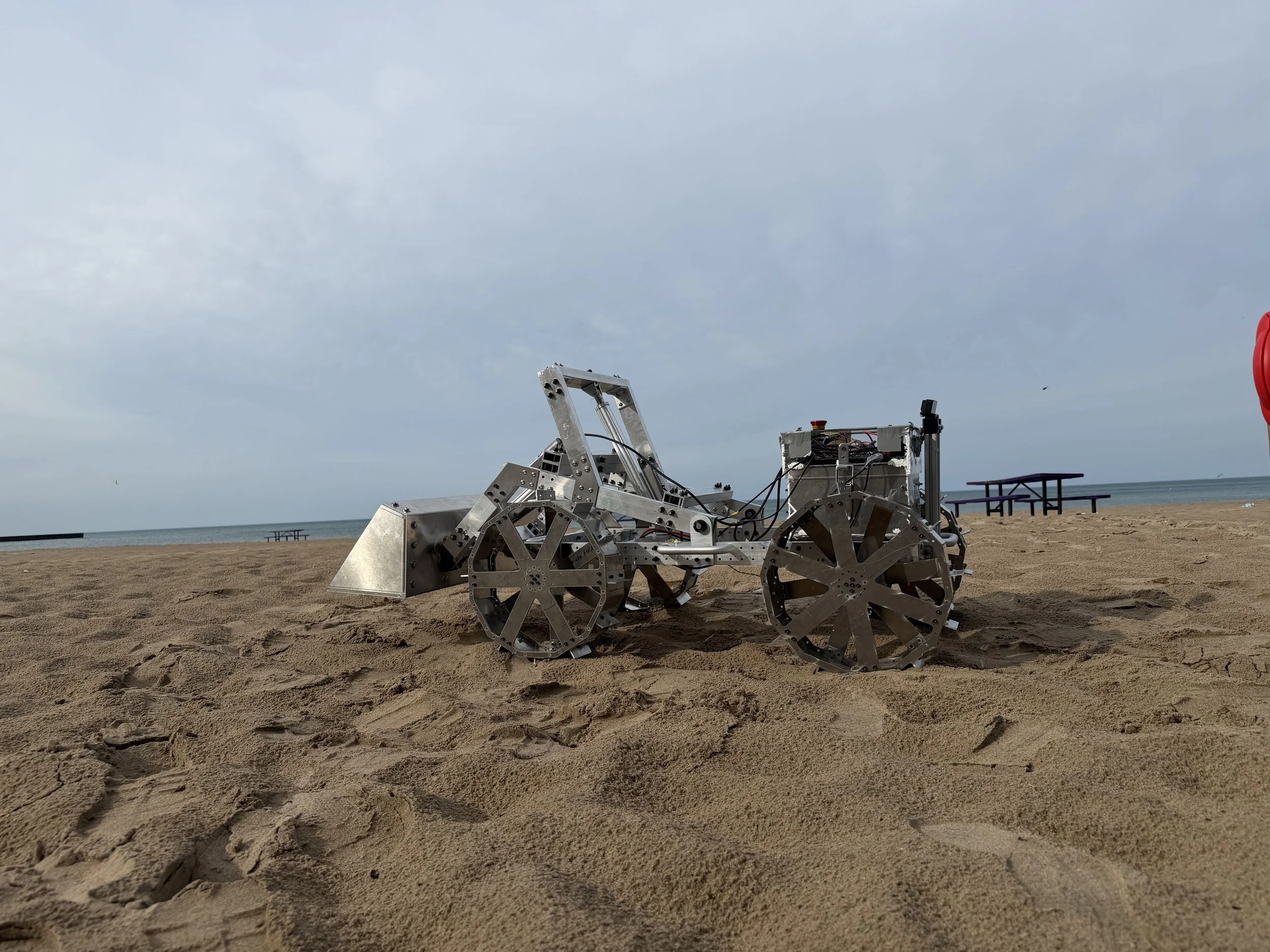
First Drive with Excavation
Systems Engineering
I led the systems-engineering process that connected Rocky’s mechanical, electrical, and software development into one cohesive rover. I translated competition rules into traceable requirements, created the system hierarchy and interfaces, established technical performance measures, conducted trade studies, and developed the concept of operations and verification plan.
I also structured the SRR, PDR, and CDR as sequential control gates. Focused drivetrain and excavation reviews preceded full-system reviews, allowing the team to resolve subsystem issues before evaluating interfaces, power allocation, and integrated operation.
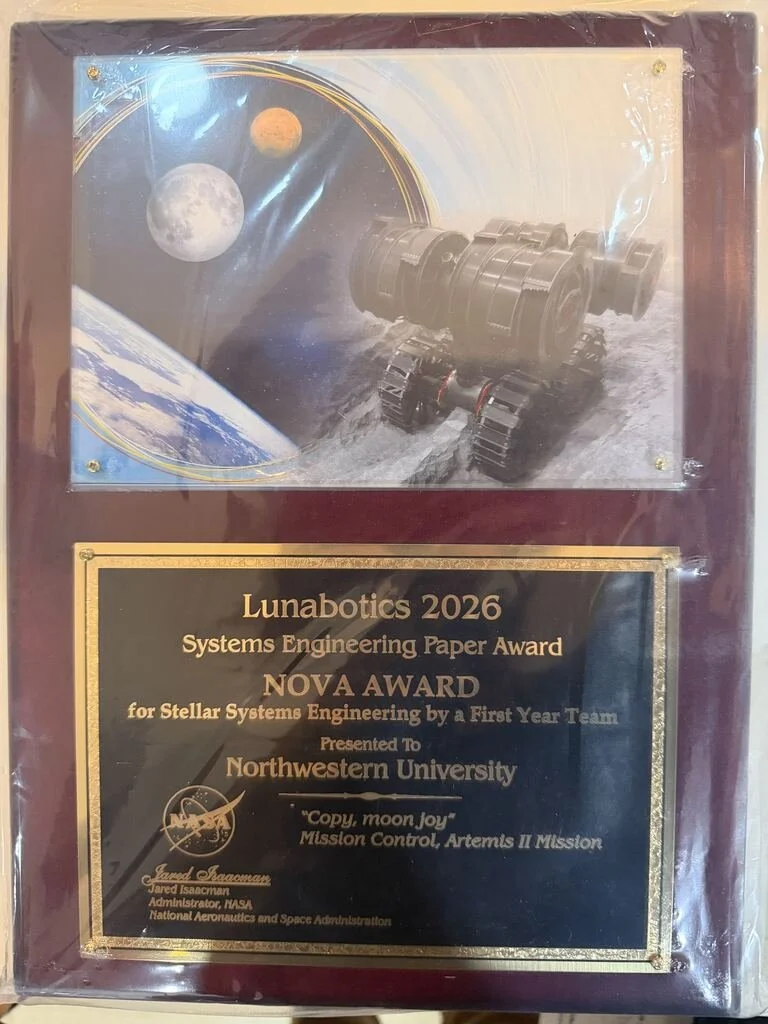
Due to the team’s size, I independently wrote and assembled the entire 28-page Systems Engineering Paper documenting this work. Our application of these practices was recognized with the NASA Lunabotics Nova Award for Stellar Systems Engineering by a First-Year Team.
Last Updated September 2026
More updates to come!